Article and photographs by Nick Gasmena
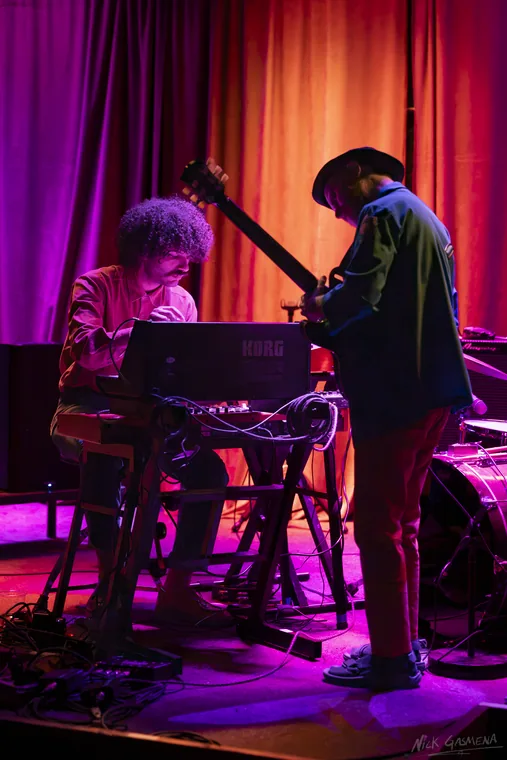
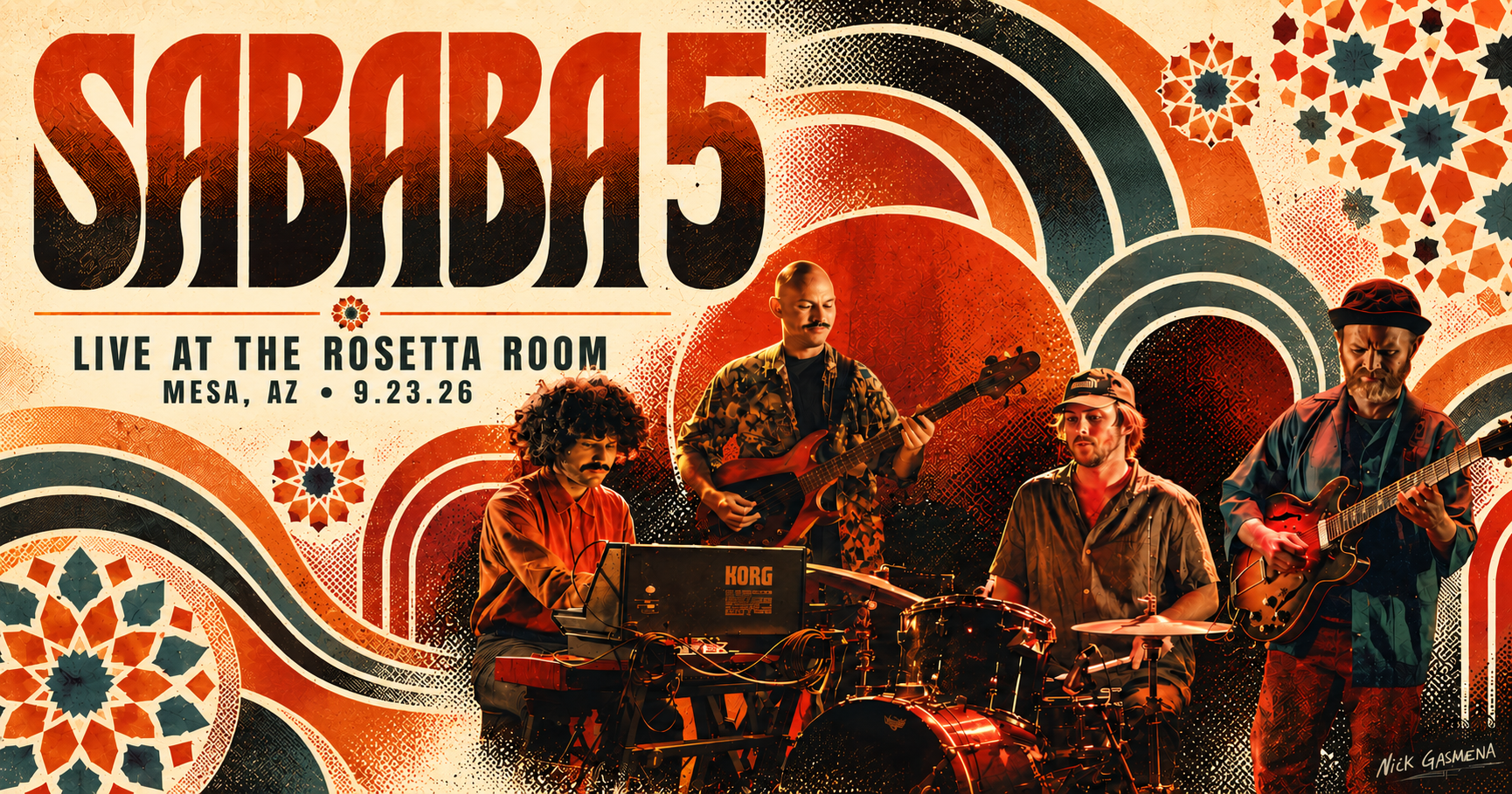
Sababa 5 US Tour 2026 at The Rosetta Room, Mesa, AZ, September 23, 2026.
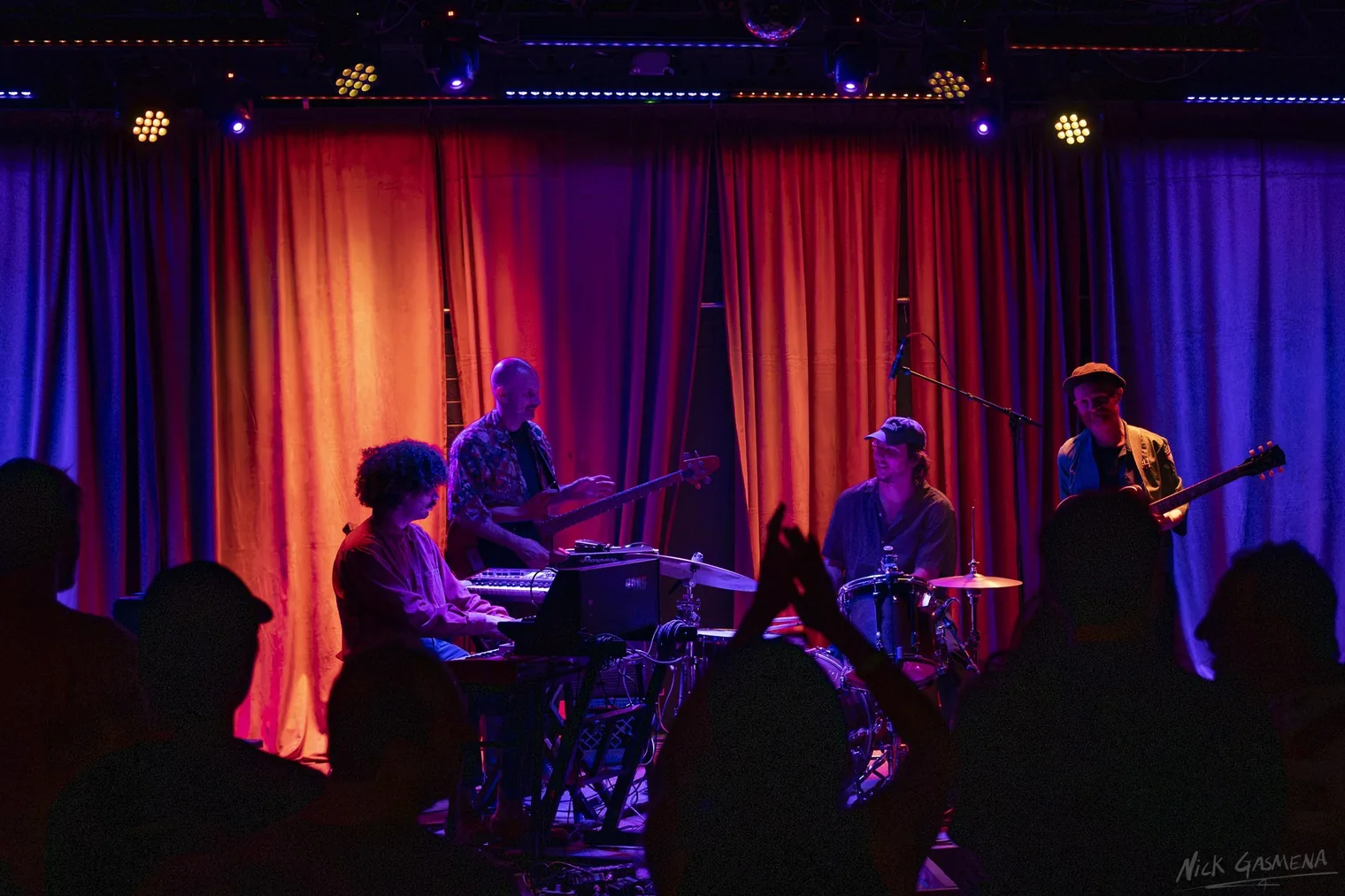
The stillness broke all at once
“One more song!”
For most of the night, the room had listened with the particular intensity of an Arizona crowd. We are not always a people who dance – maybe years of heat have trained us to conserve movement – but we listen hard. Eyes stayed fixed on the stage. Phones rose just long enough to save a fragment for later. Bodies were mostly still, yet the attention was total.
Then Sababa 5 finished, and roughly a hundred people found the same words at the same time. The chant came up from the floor of The Rosetta Room not as routine encore etiquette, but as a small room’s honest refusal to let the spell close. For a band built on instrumental music, it felt right that the audience supplied the lyric.
A friend opened the door
Lisa introduced my girlfriend, Liv, and me to Sababa 5 a few weeks before the show. She knew the combination would land. I have always loved retro funk, especially when an electric piano or synth gets to do the talking. I am equally drawn to music that leaves the familiar 12-note chromatic scales of Western pop and reaches for otherworldly Middle Eastern and Asian colors. Sababa 5 put those instincts in the same room.
When Lisa found tickets for the band’s Phoenix-area stop, I was already in. When I learned the show would be at a small venue in Mesa’s historic downtown, I asked the band if I could bring a camera. They answered quickly and graciously, while they were mid-soundcheck. Some performers treat a lens like a threat; Sababa 5 made it feel like an invitation. I am still grateful.
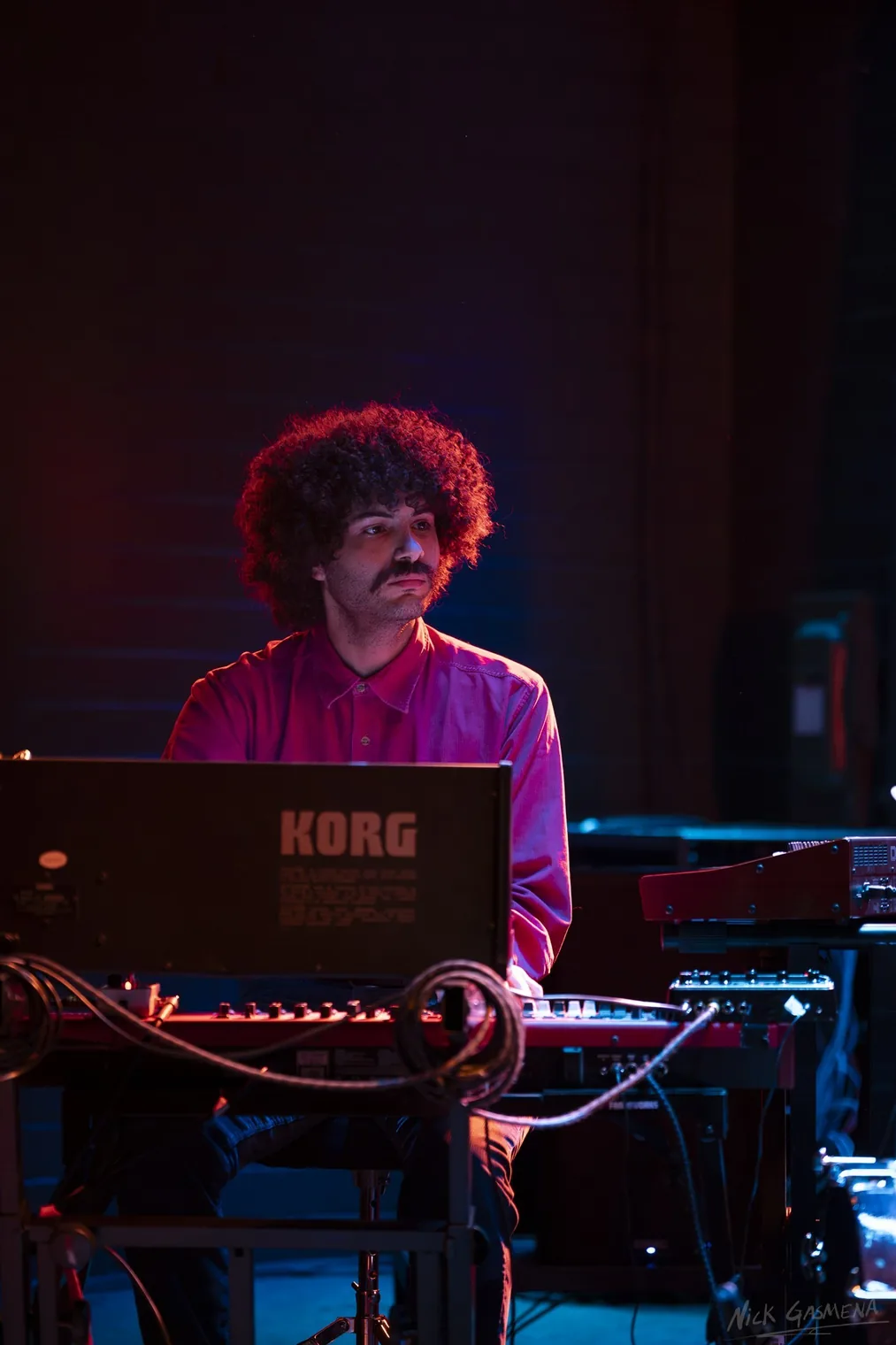
The keys speak; the rhythm answers
The architecture of the groove
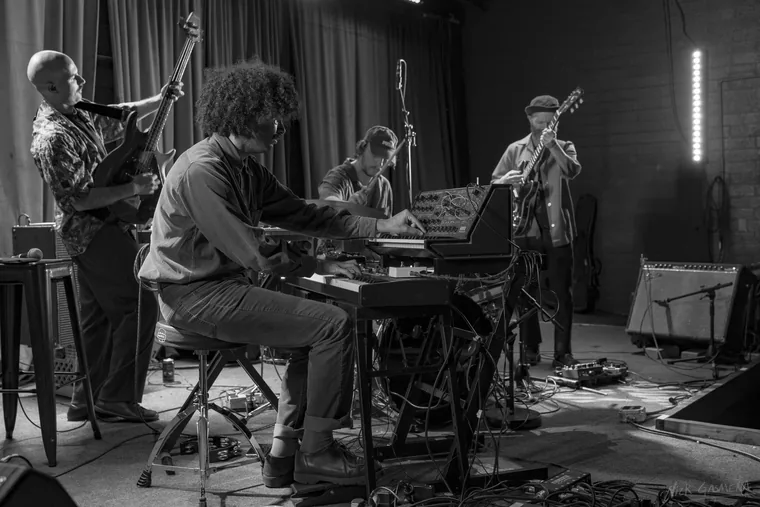
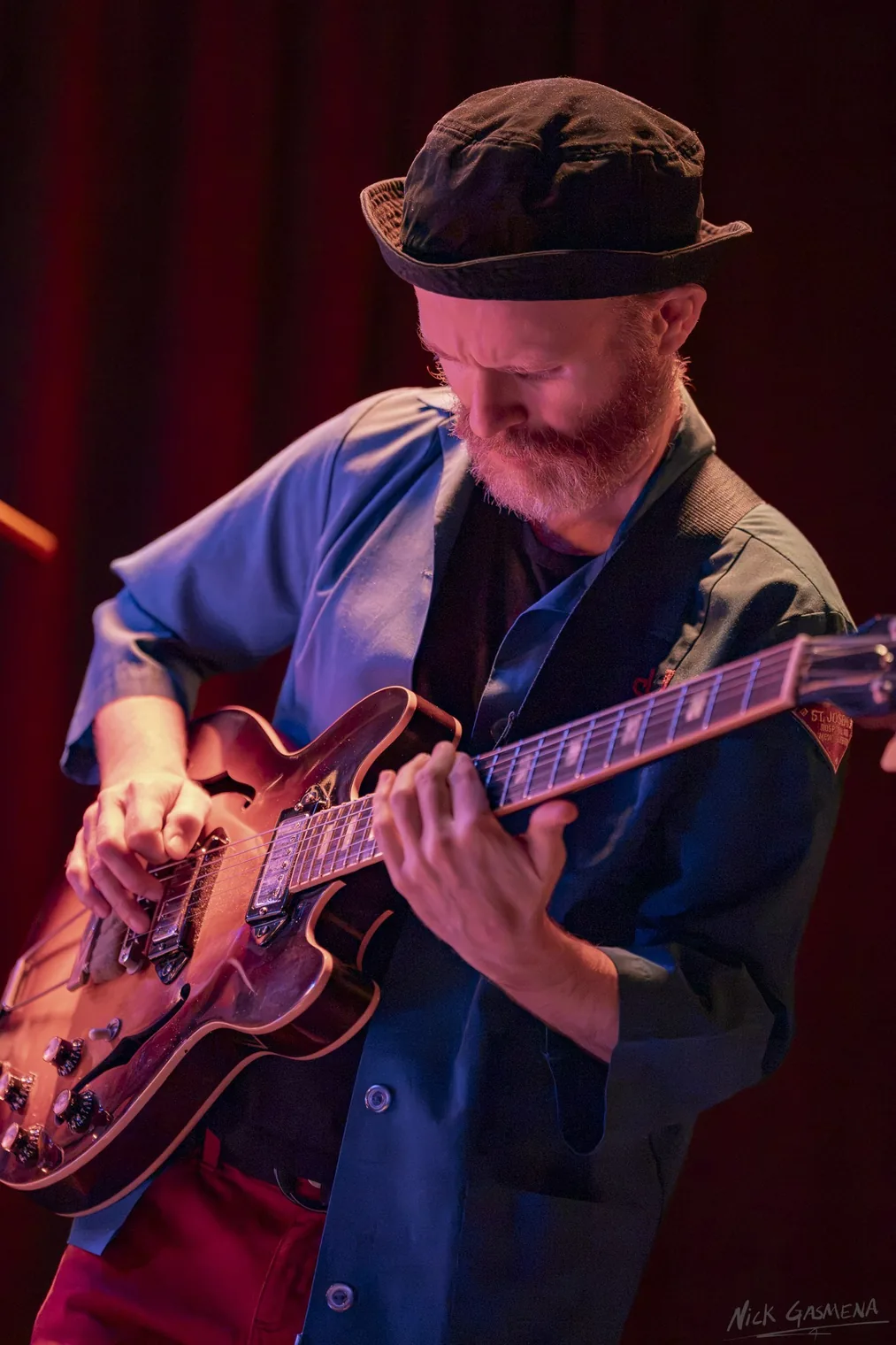
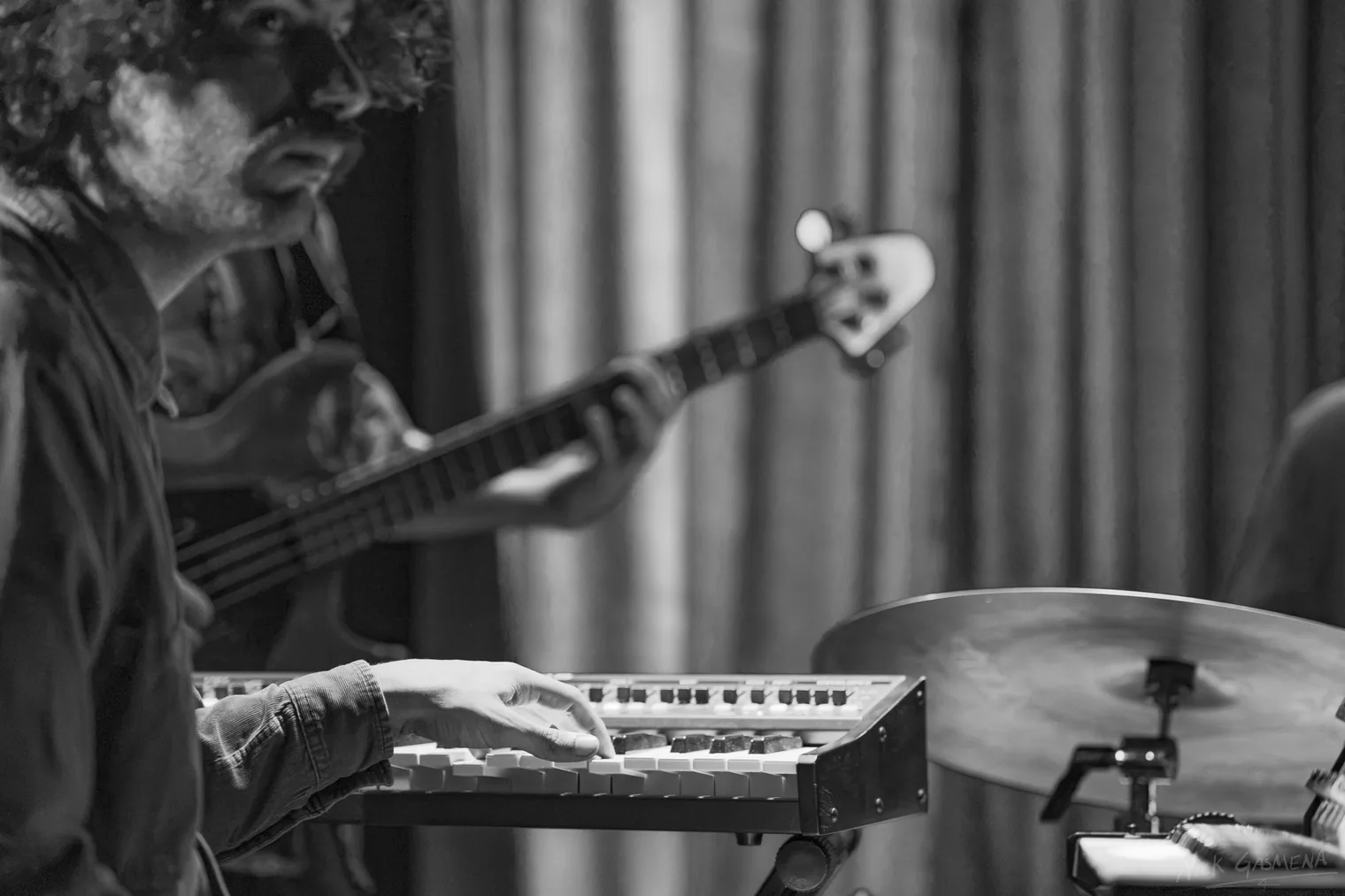
Sababa 5’s music works because it knows the difference between collage and conversation. The organs and synthesizers do not decorate the groove; they carry melody with a grainy, analog warmth. The guitar can turn surf-bright, desert-dry or softly psychedelic. Underneath, bass and drums keep the architecture sturdy enough for all that color to move.
Writers reach for hyphenated descriptions because the music keeps crossing borders: Middle Eastern psychedelia, Mediterranean funk, Turkish psych-rock, jazz, disco, Arabic folk melody. River Cities’ Reader calls it a “hypnotic blend” built from swirling organs, surf guitars and irresistible rhythms; Far Out hears a line running from 1960s American pop and rock through the psychedelic and funk traditions of the Middle East.
Those descriptions are useful, but live, the appeal is simpler. A figure appears on keyboard. Guitar answers. Bass presses a phrase deeper into the floor. Drums insist without crowding. The pattern comes back a little changed, and suddenly the same groove feels new. The music keeps asking you to notice how one small turn can change the temperature of the whole room.
That is the part that reached me first. I came in listening for electric piano and synth, and for scales that do not resolve where my Western-trained ear expects. I left thinking about restraint. Sababa 5 are capable of density, but they understand space. Each player leaves oxygen for the next.
The band
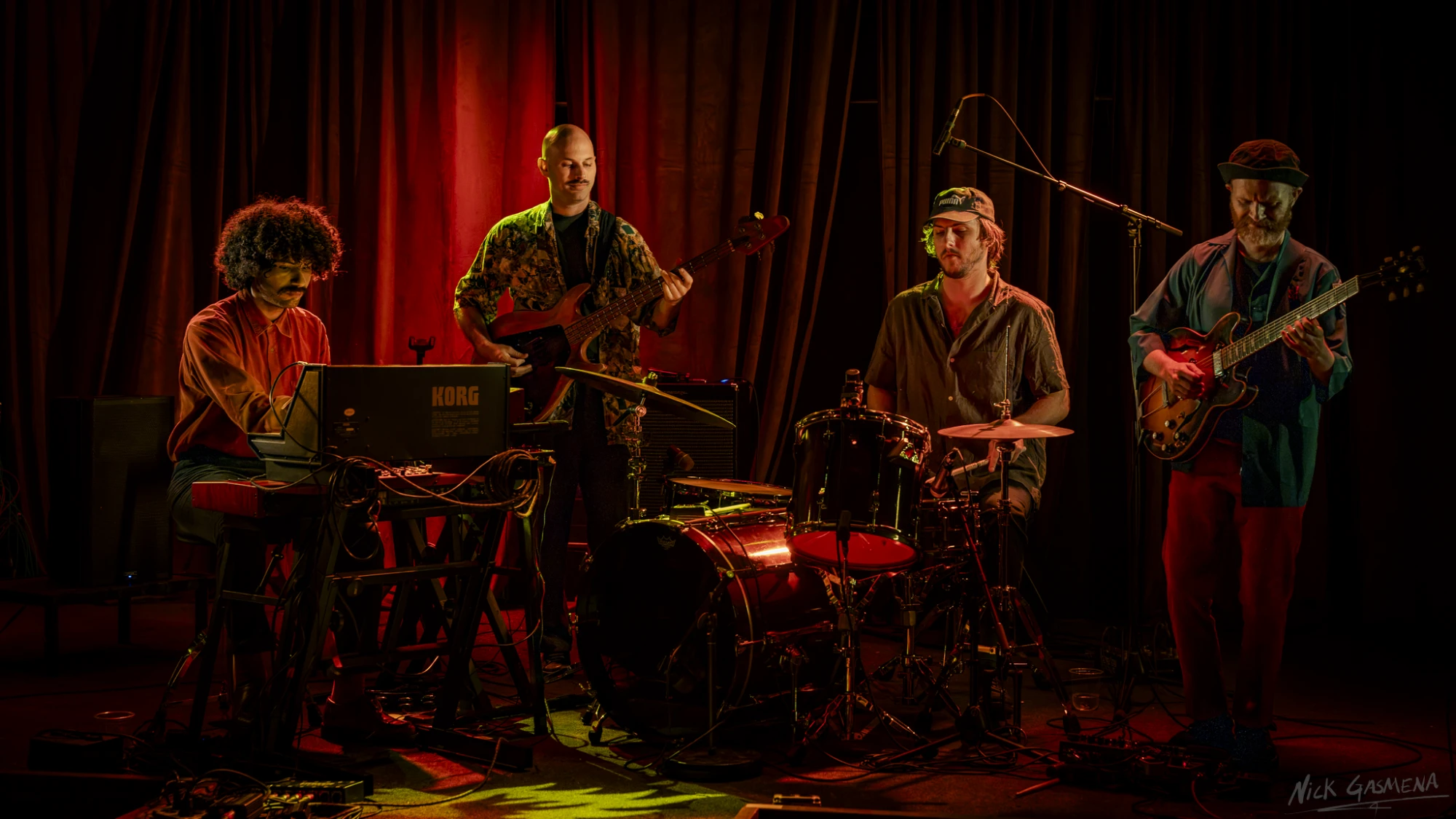
- Keys
- Eitan Drabkin
- Bass
- Amir Sadot
- Drums
- Itamar Weinstein
- Guitar
- Ilan Smilan
Four voices, one elastic pulse
What caught me first was the way Sababa 5 step outside the familiar 12-note chromatic scales that carry so much Western pop. Their Middle Eastern scales slide into the cracks between piano keys – notes and bends most Western ears never learned to expect – then lock that otherworldly color to the warm punch of 1970s funk, the fuzz of Anatolian psych-rock, Mediterranean disco and the forward pull of Afrobeat.
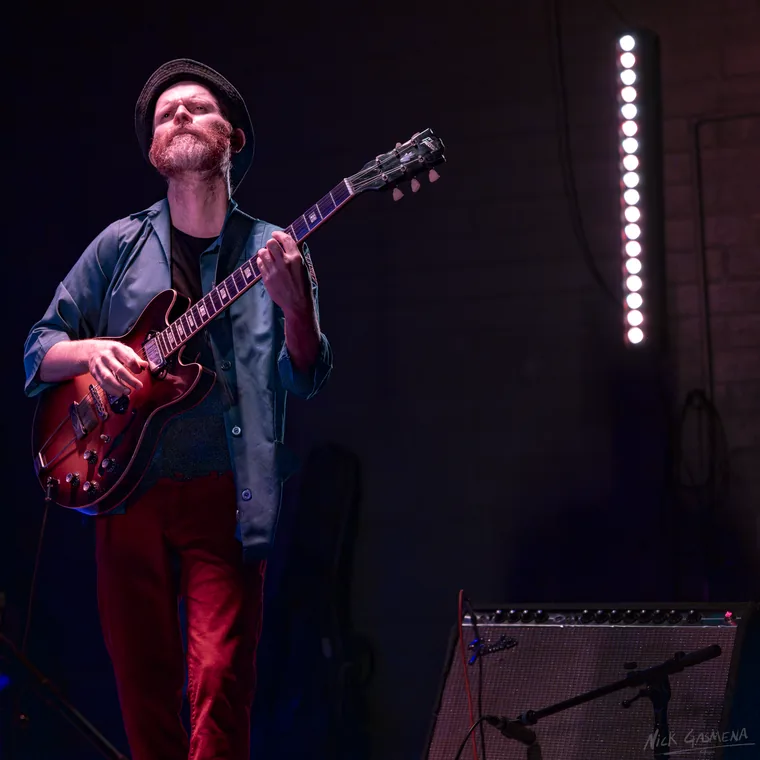
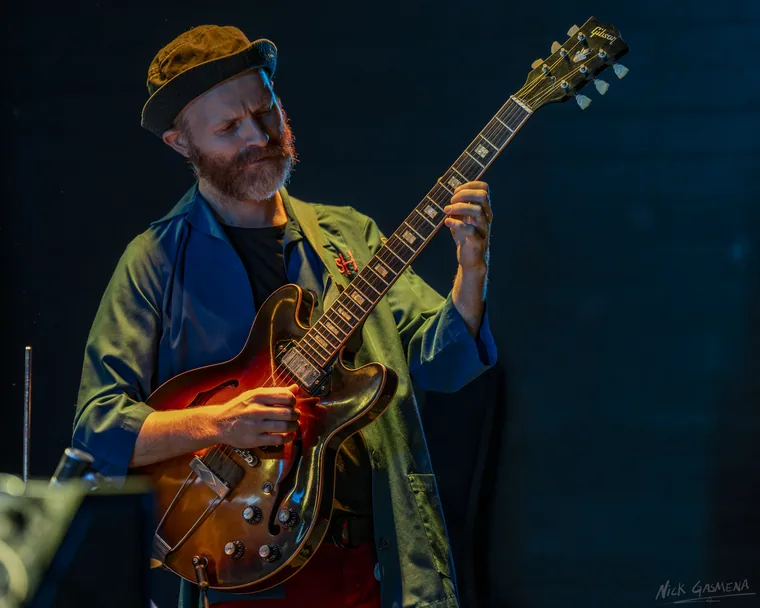
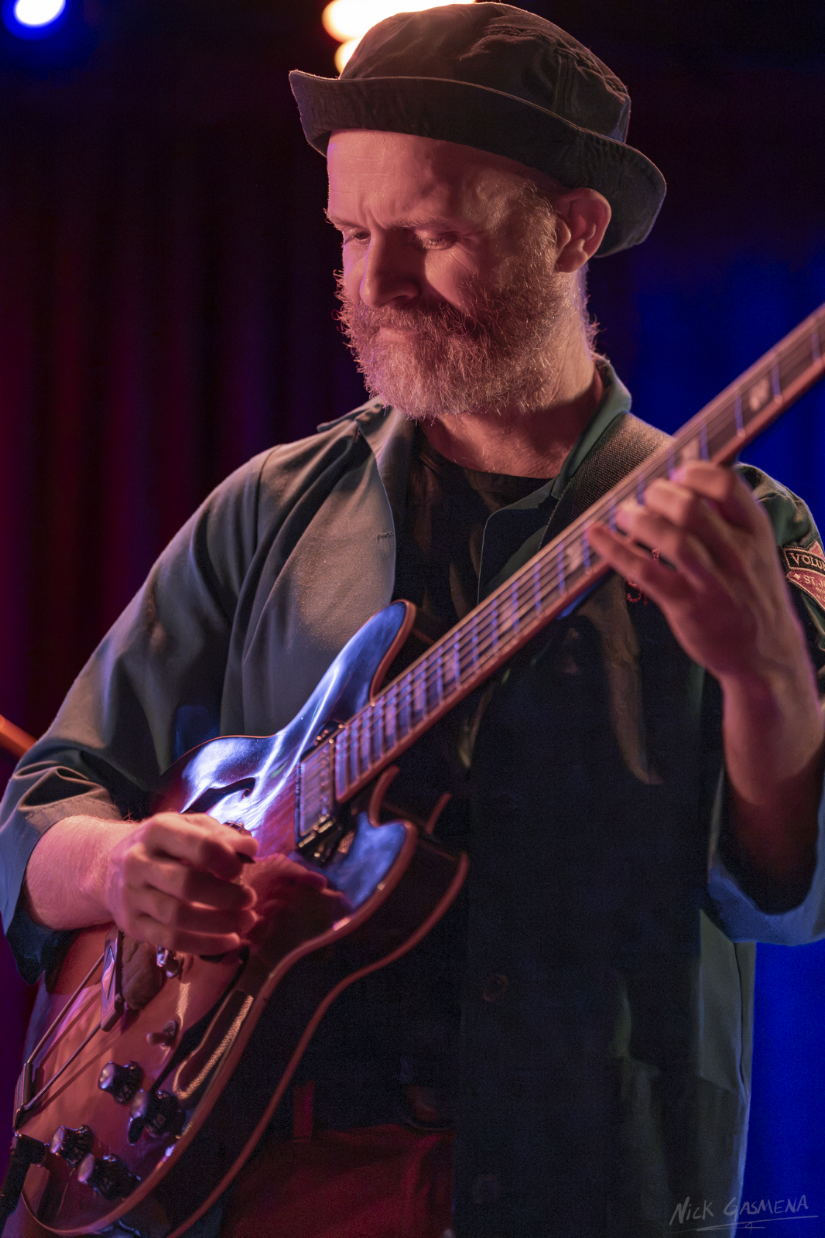
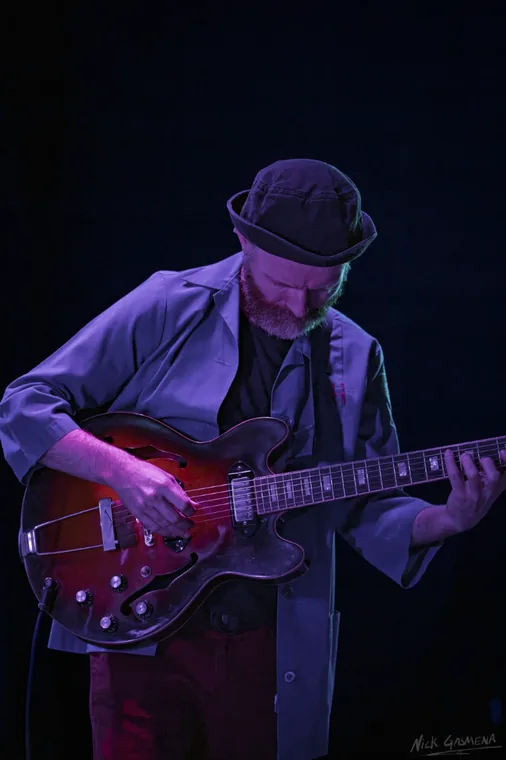
Ilan Smilan / Guitar
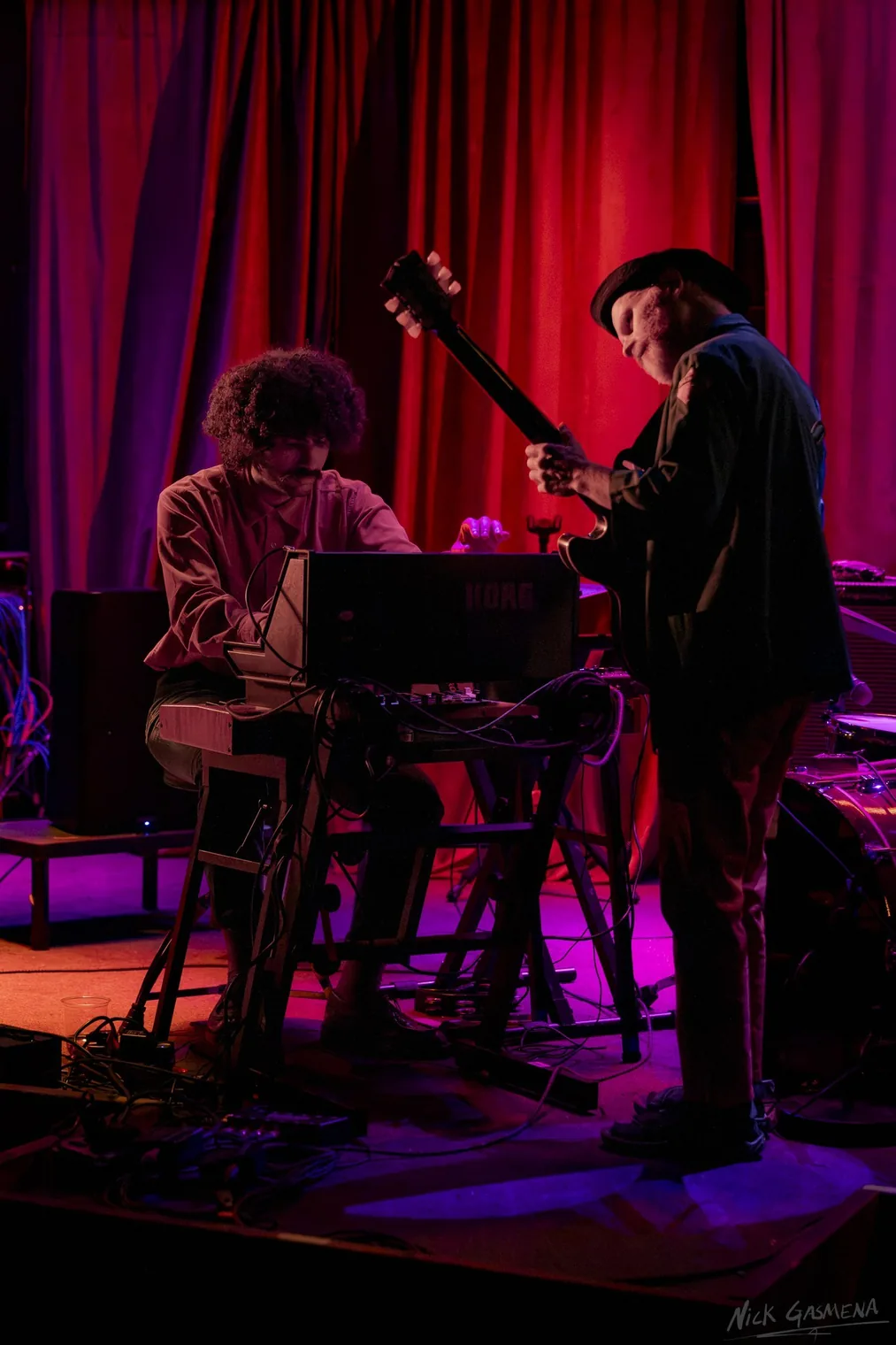
Smilan makes rhythm and melody feel like one motion. His guitar hits land just off the beat, jerking the groove sideways; then his lead lines bend into the spaces between familiar notes before snapping back home.
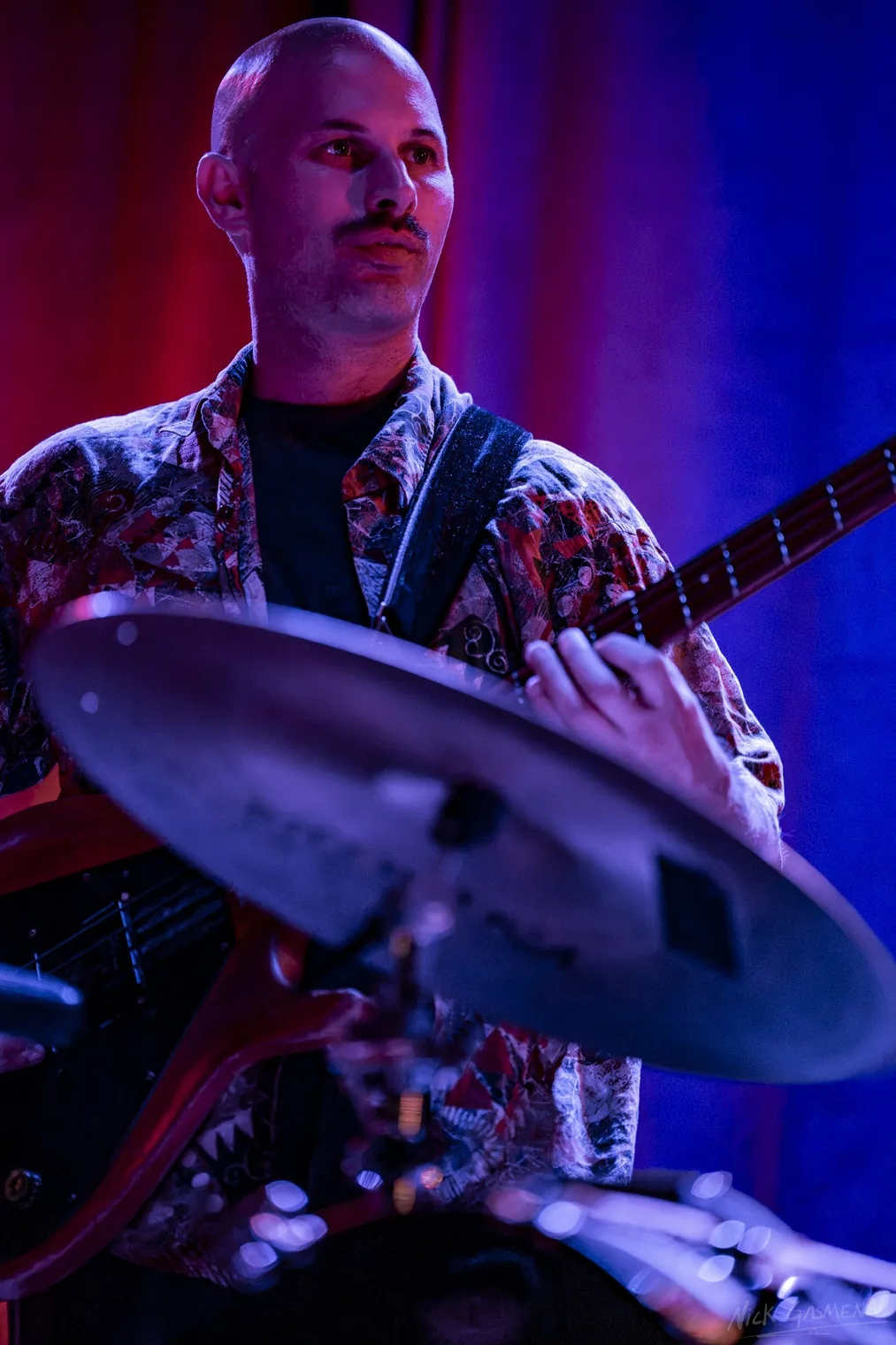
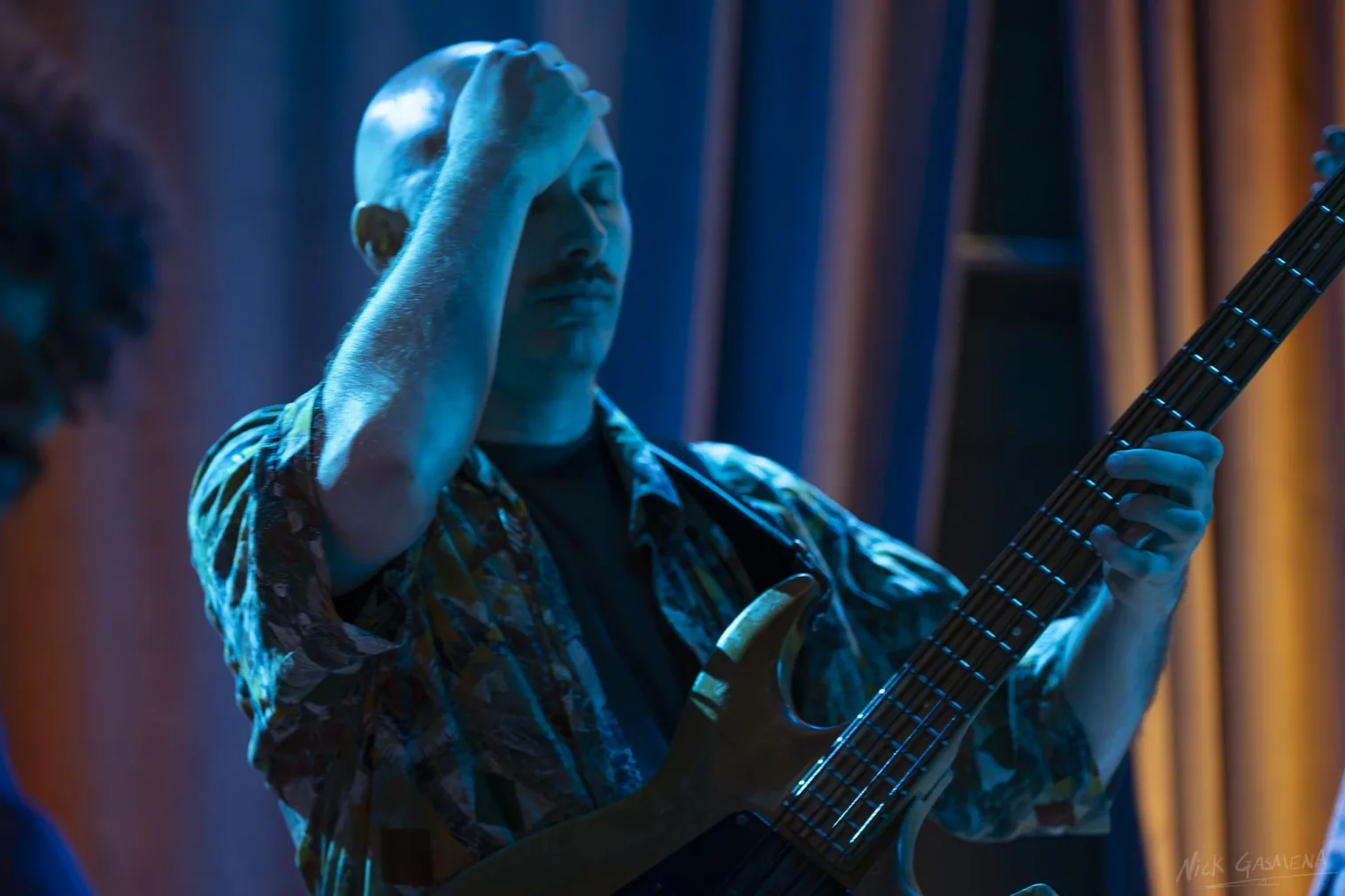
Amir Sadot / Bass
Sadot is the floor beneath it all. His bass is deep, round and unmistakably ’70s – less a clock than a slow, steady tug on the body. He keeps the song grounded while everything above him bends and shimmers.
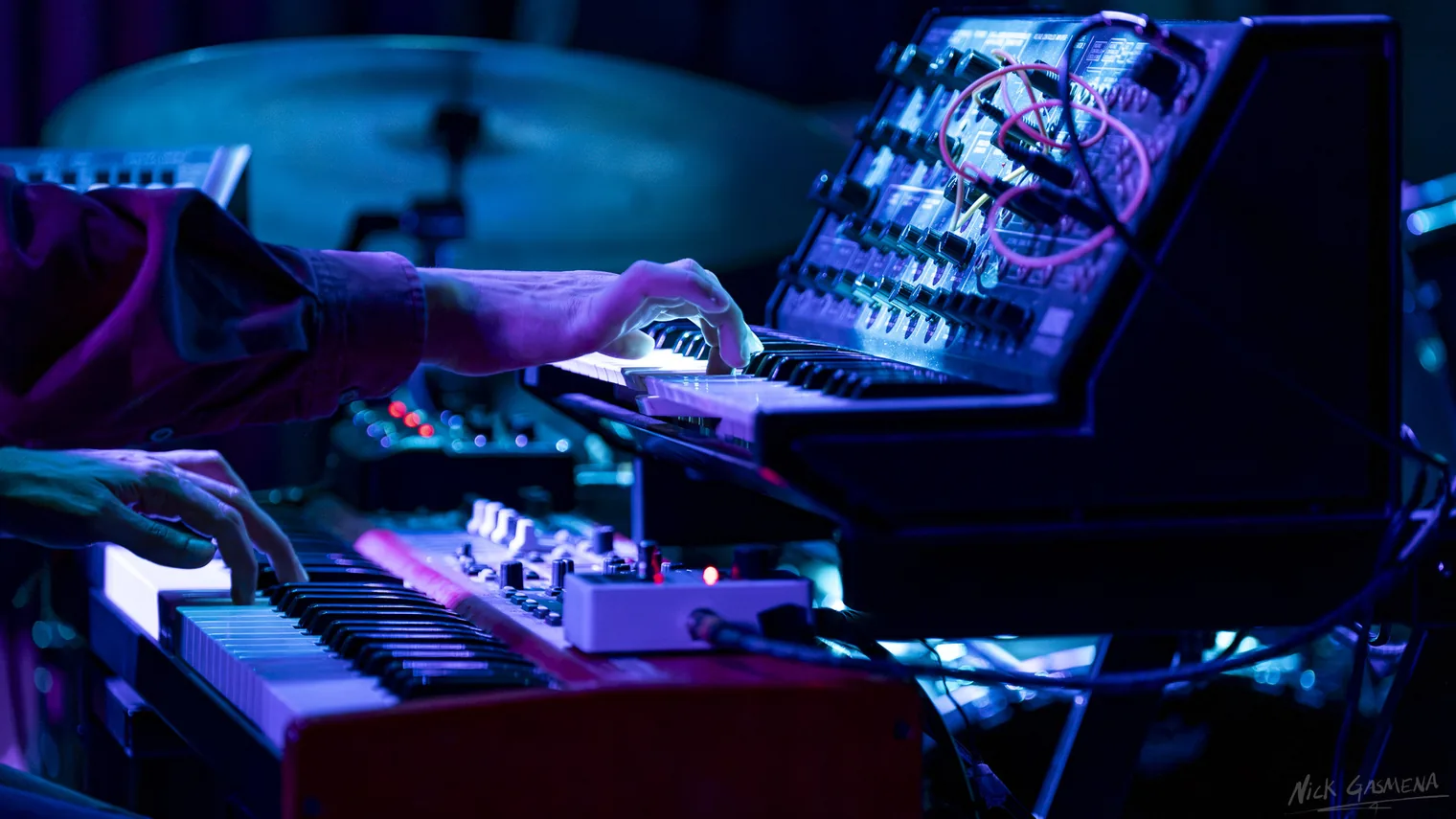
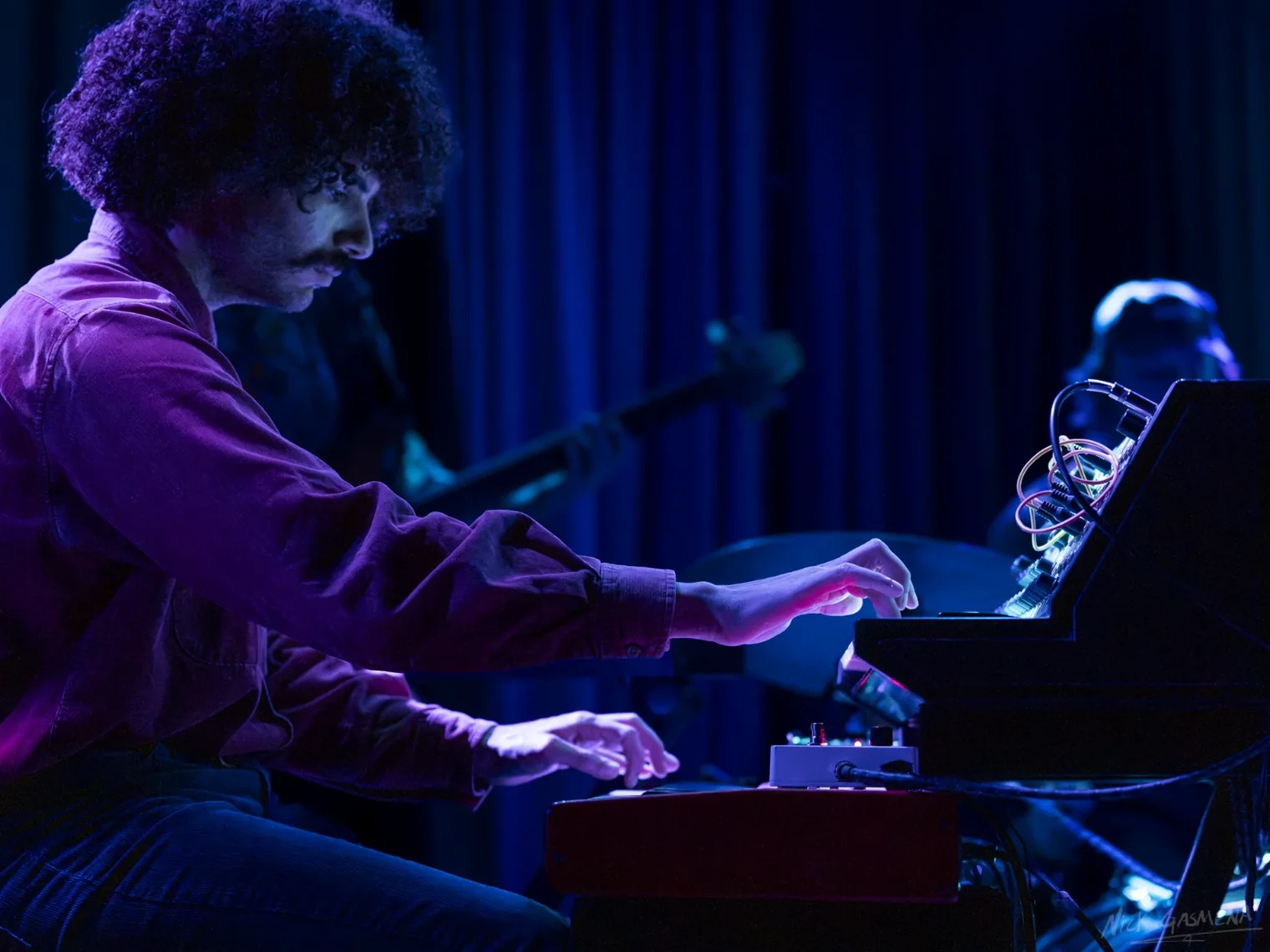
Eitan Drabkin / Keys
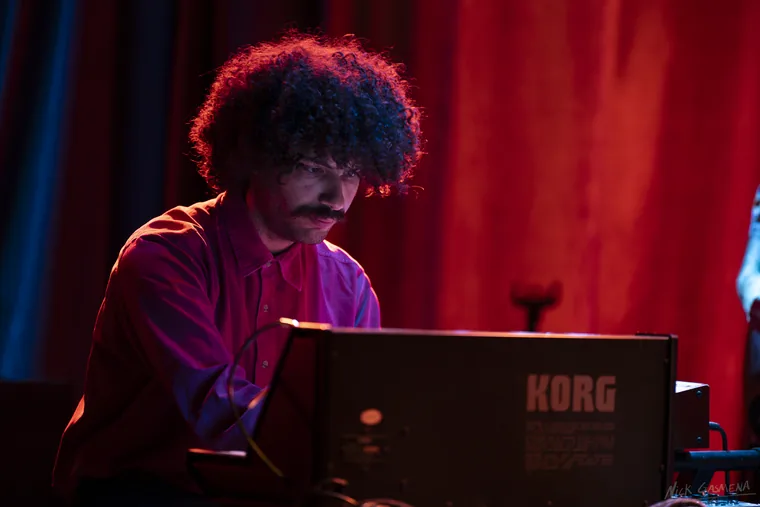
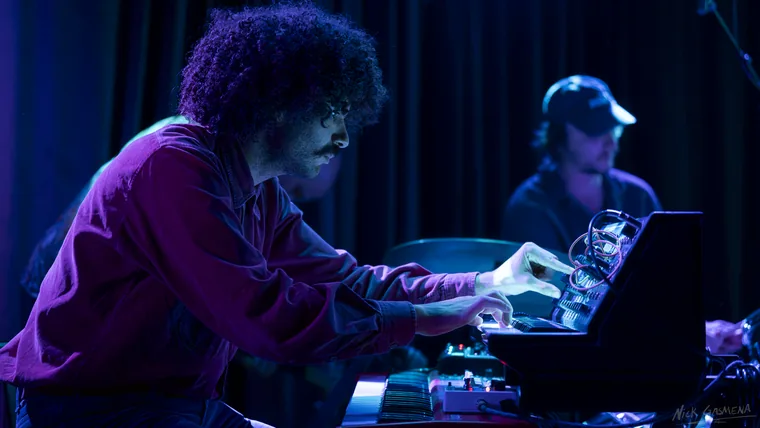
Drabkin gives the band its glow: the soft bell-like warmth of electric piano, the plush hum of Rhodes-style keys and analog synthesizers that seem to melt at the edges. On Elifelet 23, Batov hears a “microtonal organ sound reminiscent of legendary Egyptian musician Magdi el-Husseini” – an organ slipping between the fixed notes of a Western keyboard.
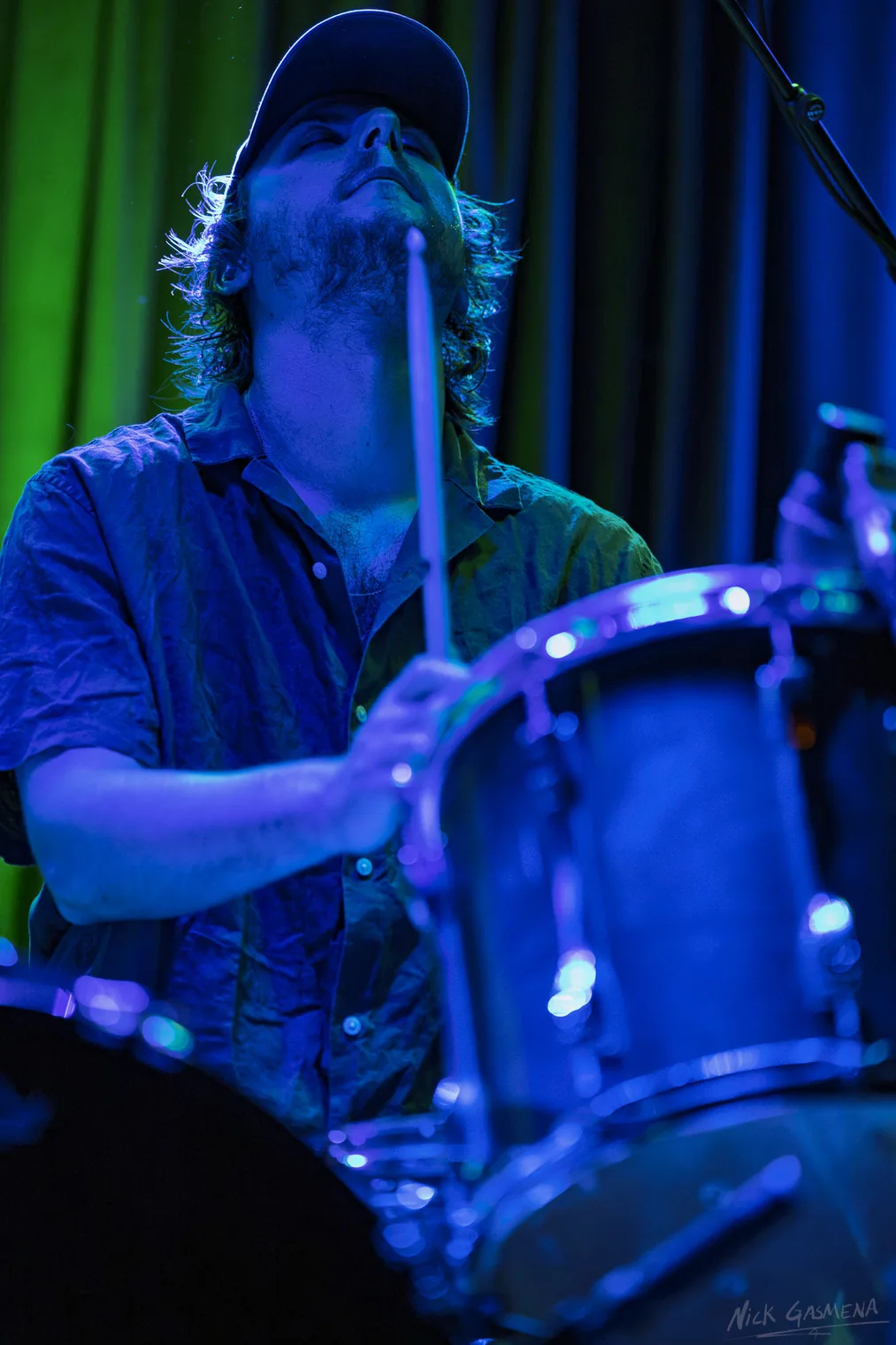
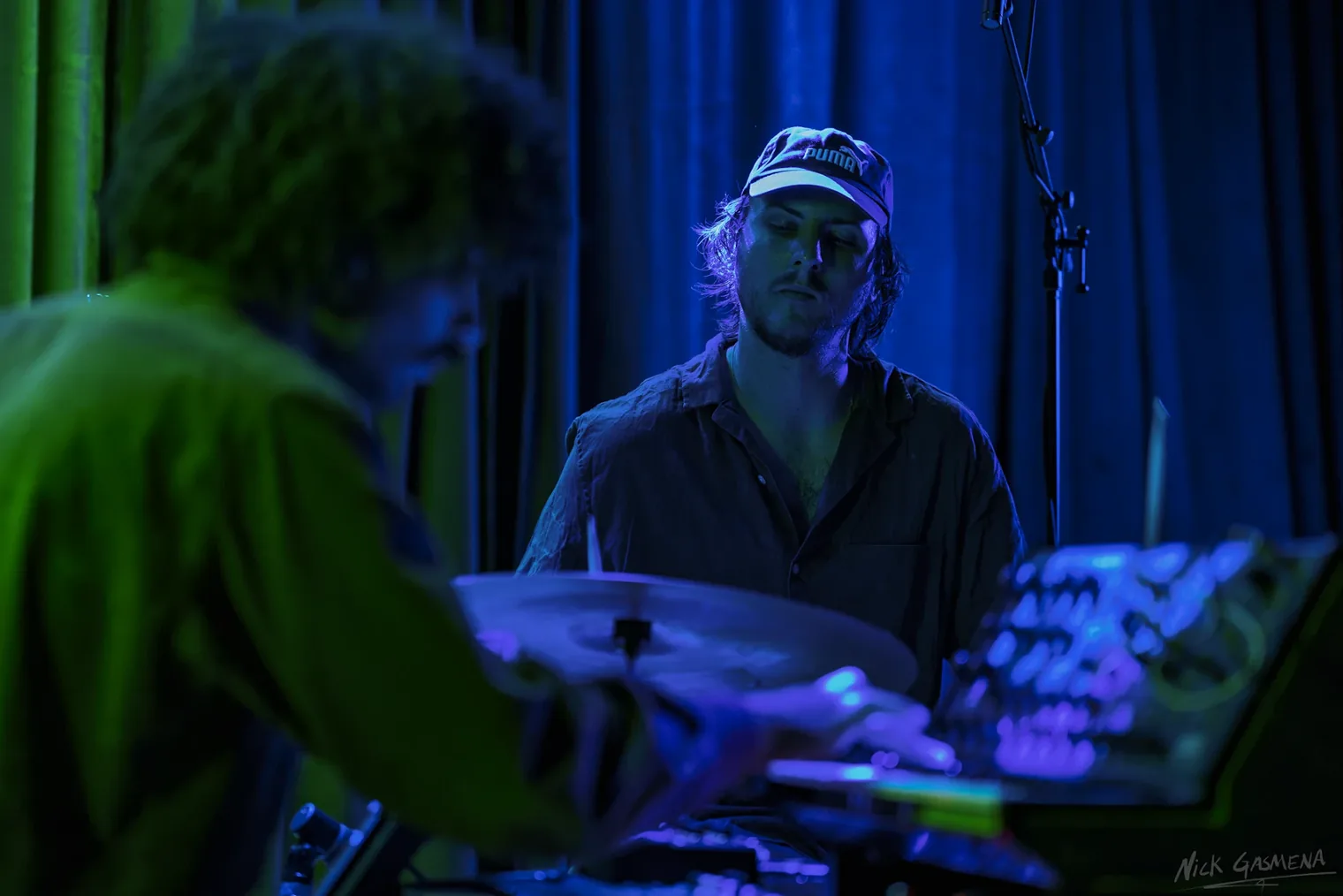
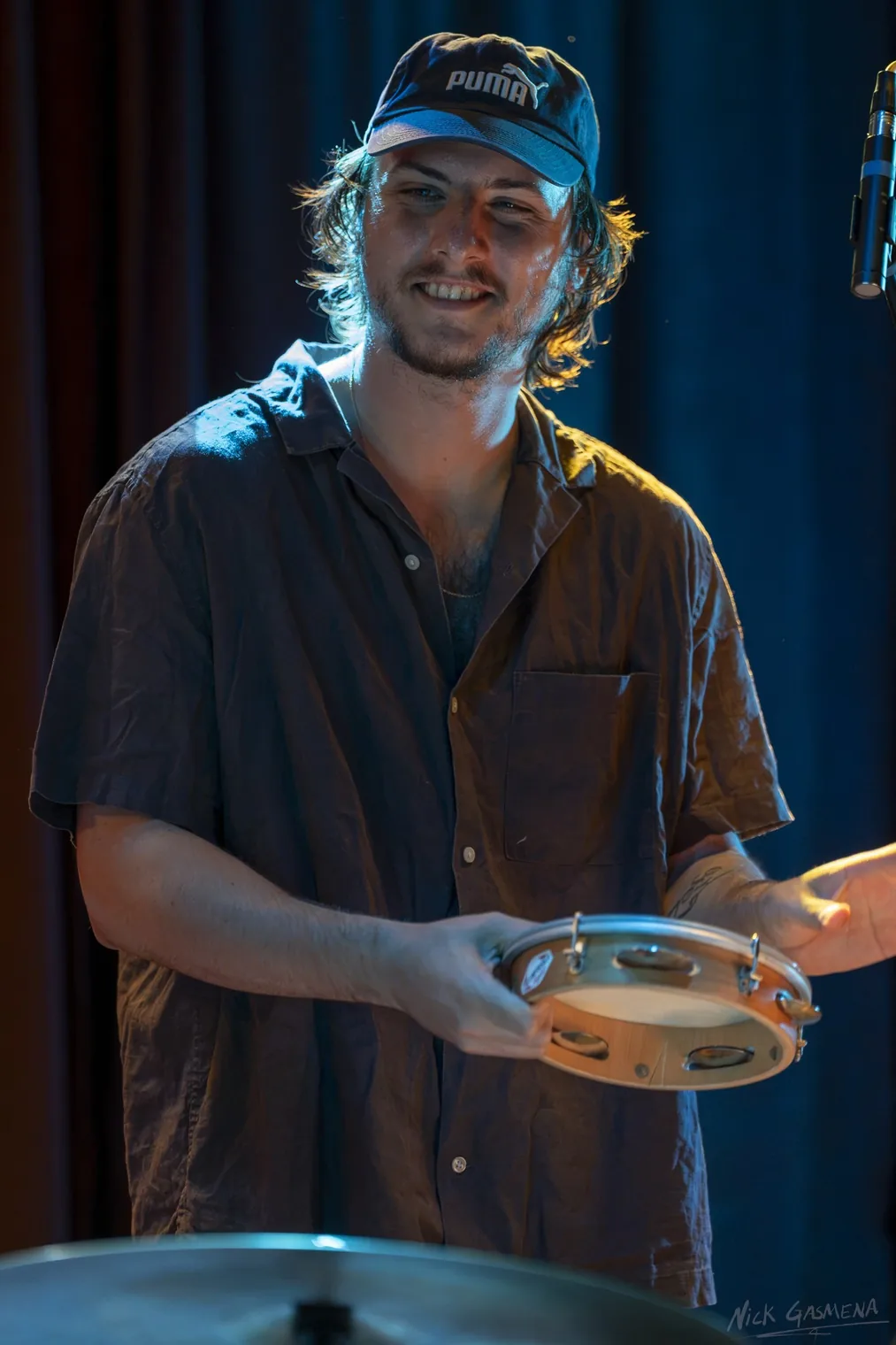
Itamar Weinstein / Drums
Weinstein’s drums crack, tumble and breathe. There is some of the crisp snap of a great 1960s studio drummer in his hands, but also the circling pull of North African percussion – a rhythm that seems to roll forward rather than march. He drives the music without crowding it.
Raz Man was the earlier drummer and is credited on the 2023 single Eilat 22 / Elifelet 23; Weinstein is the current drummer.
The sound, in crimson
A small room made the music larger
Wednesday, September 23 arrived with unseasonably cool air for the Phoenix area. Before a note was played, the night already felt generous.
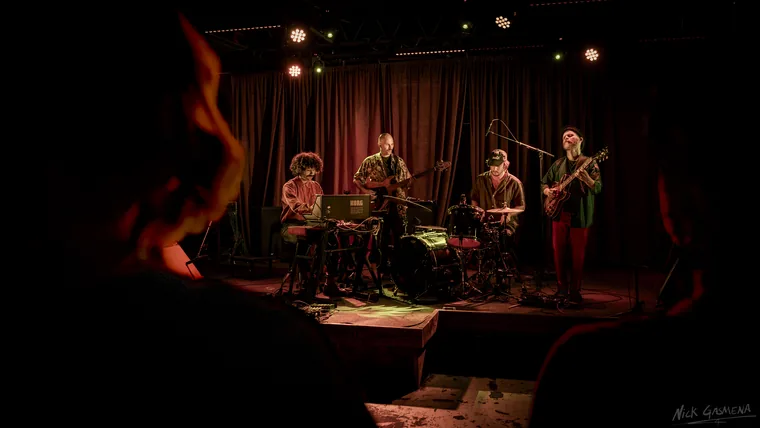
The Rosetta Room sits at 104 East First Avenue in Mesa, close to the low-lit charm of the historic downtown district. The venue is small and adaptable, the kind of place where there is no truly distant corner and no barrier thick enough to turn musicians into an image. Sababa 5’s listing put the show at 7 p.m.; once the band began, clocks mattered less.
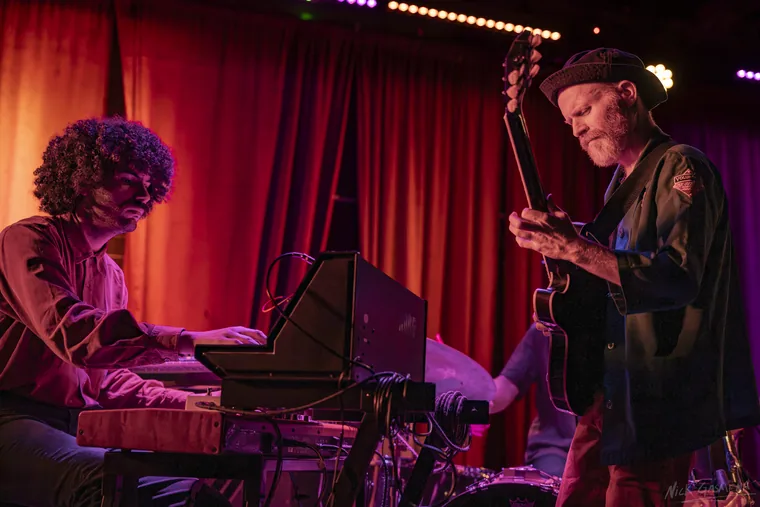
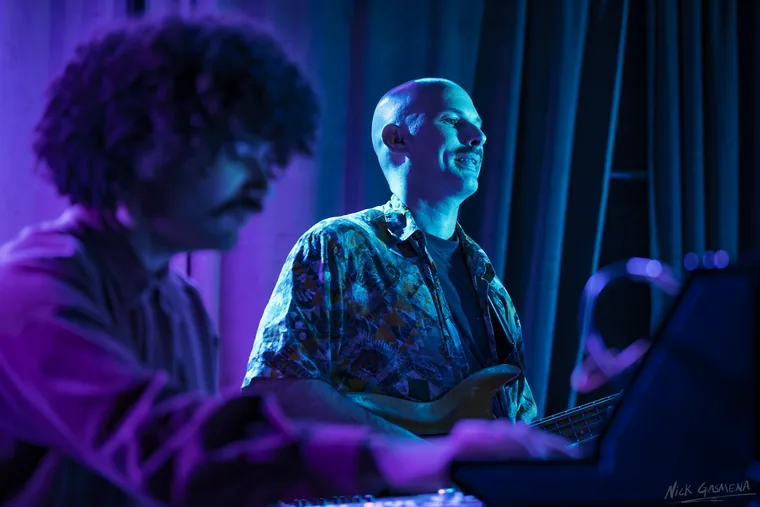
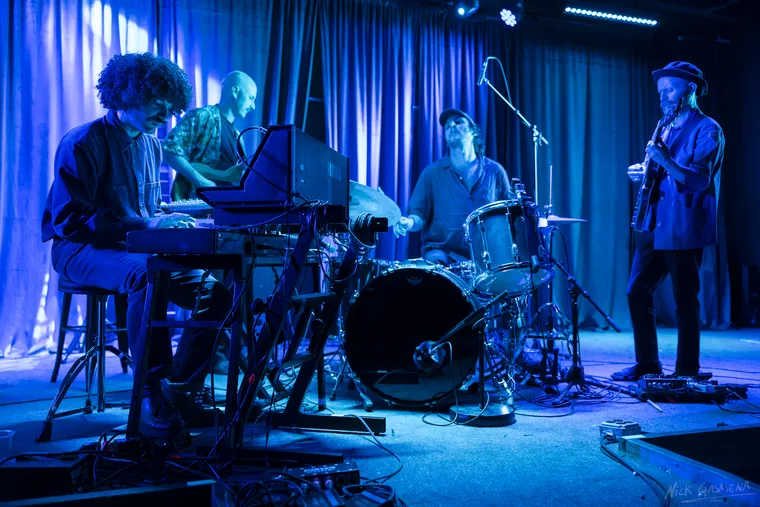
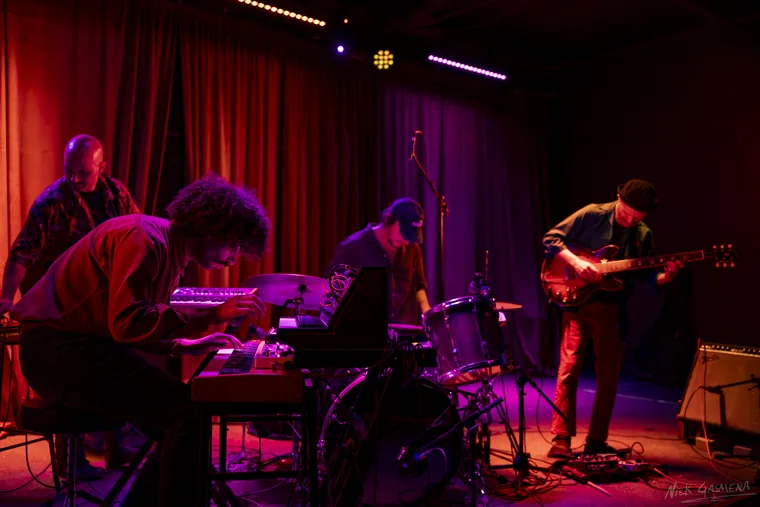
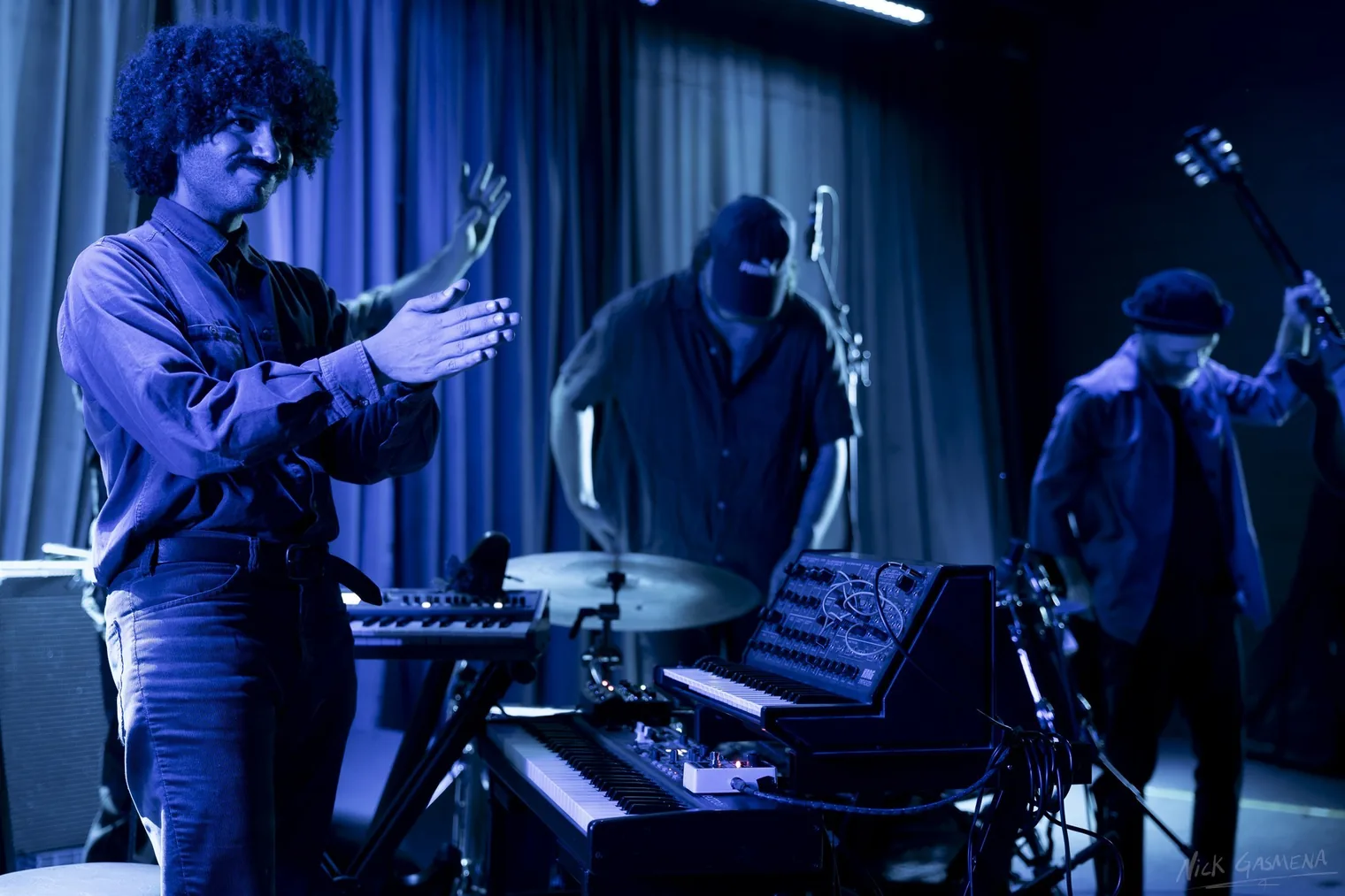
The lighting engineer gave the stage a changing palette without burying it in spectacle. Color moved across faces, chrome and wood. The mix stayed clear and physical, never punishing. I could get close enough to see sweat gather on the musicians’ foreheads without losing my hearing in the process. That kind of intimacy cannot be bought at an arena.
They were intensely concentrated and zen at once – four people working hard enough to make effort look like atmosphere.
Onstage, the band looked eclectic, professional and completely in the zone. Their focus was not cold. It was a shared inwardness, each player listening across the stage as closely as we were listening from the floor. The bass and drums did not merely keep time; they made the room breathe. Guitar and keys moved above that pulse like heat shimmer.
From Tel Aviv to Paris, with the groove intact
A reporting detail is worth getting right: Sababa 5 are an Israeli instrumental quartet, Tel Aviv natives now based in Paris.
Sababa 5 began taking shape in the mid-2010s around bassist Amir Sadot and guitarist Ilan Smilan. Its musicians came through a fertile Tel Aviv scene, playing with ensembles including Hoodna Orchestra, Tigris and Kutiman Orchestra and backing singers such as Gili Yalo, Ester Rada and Liraz Charhi. Batov Records describes them as steeped in psych rock, funk, Yemenite musical tradition and the many Mediterranean and Middle Eastern traditions that have long blended into one another.
Their studio sat on Eilat Street at the border of Jaffa and Tel Aviv – a creative sanctuary where their signature crossover sound took shape. The 2023 double single Eilat 22 / Elifelet 23 was named for that studio address, turning the coordinates of the room into a title and a small piece of band history.
The current lineup places Smilan on guitar, Sadot on bass, Eitan Drabkin on keys and Itamar Weinstein on drums. Album credits also record a real transition without inviting invention: Raz Man played drums on the 2022 self-titled debut, the Rali EP, 2023’s Aspan and the 2023 Eilat 22 / Elifelet 23 single, and appears on much of the 2024 collaboration Kokoro; Weinstein is credited on Nadir in 2025 and Ça Va Ça Va in 2026. The reasons are theirs to tell.
2022 Sababa 5 and the Rali EP with Shiran Tzfira
2023 Aspan
2024 Kokoro, a collaborative album with Yurika Hanashima
2025 Nadir
2026 Ça Va Ça Va, the band’s “hafla album”
A word with a whole room inside it: Batov describes Ça Va Ça Va as a hafla record – music shaped by the communal joy of Middle Eastern weddings, parties and festive gatherings. Its electric guitar, bass, drums, organ and synth turn that inheritance into dance-ready instrumentals that hold both celebration and longing.
The road kept moving west
The Mesa performance came deep into Sababa 5’s September-October North American run. Their social media posts trace a route through Rock Island and Chicago, Montreal and the Northeast, then Austin, Mesa, San Diego and Los Angeles before the band moved up the Pacific coast through Portland and Vancouver. The U.S. leg closed at Seattle’s Clock-Out Lounge on October 1.
After that long westward arc, dates in Dresden, Chemnitz, Mainz and Zürich were listed for November. It is easy to flatten a tour into pins on a map. From the floor, though, each pin is a room: a soundcheck, a set of cables, a different engineer, a hundred unfamiliar faces deciding whether to meet the music halfway.
The weight joy can carry
There is a temptation, when music comes from a region the headlines describe mostly through conflict, to turn every artist into a symbol and every song into testimony. That temptation should be resisted. I went looking, and found nothing from Sababa 5 or the players in it that speaks of personal hardship – and it is not mine to write for them. Their move from Tel Aviv to Paris is documented; the reason is not. Their music has changed, their drummer has changed, and their road has widened. Beyond that, privacy deserves the same respect.
What they have said, they said plainly. In 2025 around the time of their departure from Israel, the band posted:
We call for an immediate end to all violence, the release of all hostages, unrestricted humanitarian aid to enter Gaza, recognition of the suffering of all sides, and the pursuit of a just peace that respects everyone.
That is their statement, and it needs nothing from me. I will only add a wish: peace for them, for the country they come from, and for every neighbour on that map – and a future where going home is an ordinary thing to do, and the only borders their music has to cross are the ones between the keys.
One thing that is consistent in their message, is the insistence on human connection. Their catalog has drawn inspiration from toward Yemenite songs with Shiran Tzfira and Japanese folk and pop with Yurika Hanashima. Their instrumentals draw from Turkish, Arabic, Mediterranean, jazz, funk and psychedelic languages without treating any of them like museum pieces. On Ça Va Ça Va, the band returns to celebration itself – not empty cheerfulness, but joy with longing still inside it.
In heavy years, that can feel quietly defiant. This is my reading, not a claim about the band’s private lives: to gather strangers, hold a groove steady and make room for pleasure is a way of refusing numbness. The music does not deny what hurts. It reminds the body that it can still answer.
There’s something about hearing that much joy from people who understand exactly how fragile joy is. At some point I think it stops being just music, and it starts feeling more like beautiful defiance.
“Ça va, ça va”
I did not know all of this in the room.
I knew only that Lisa had found something she wanted Liv and me to hear; that a band I had just discovered trusted me close to the stage with a camera; that the lights kept changing and the sound stayed kind; that four musicians could look intensely concentrated and completely at peace; and that an Arizona crowd could stand almost motionless while listening with its whole body.
Learning the history afterward does not replace the feeling. It gives the feeling roots. Now the old records and new ones sit behind that night: the first self-titled album’s psychedelic groove, Aspan widening the frame, Kokoro opening a conversation with Japan, Nadir darkening the colors, and Ça Va Ça Va bringing the music back toward the hafla – toward gathering.
The encore chant “One more song” was not the end of the story. It was a room full of fans promising to remember.
Coda
So thank you, Lisa, for opening the door. Thank you, Liv, for walking through it with me. Thank you to The Rosetta Room’s crew for letting closeness feel beautiful instead of overwhelming. And thank you, Sababa 5, for the warm welcome, for the permission to photograph, and for music generous enough to cross languages without needing words.
Safe travels to the band as the road turns back toward Europe, toward friends, family and the next small stage. May the rooms stay full, the mixes stay clear and the songs keep carrying both ache and celebration without pretending one cancels the other.
And if Sababa 5 comes back through the desert, there is a small room in Mesa that will be waiting – listening hard, cameras briefly raised, ready to ask again.
Ça va, ça va. It is going to be all right.
Find Sababa 5
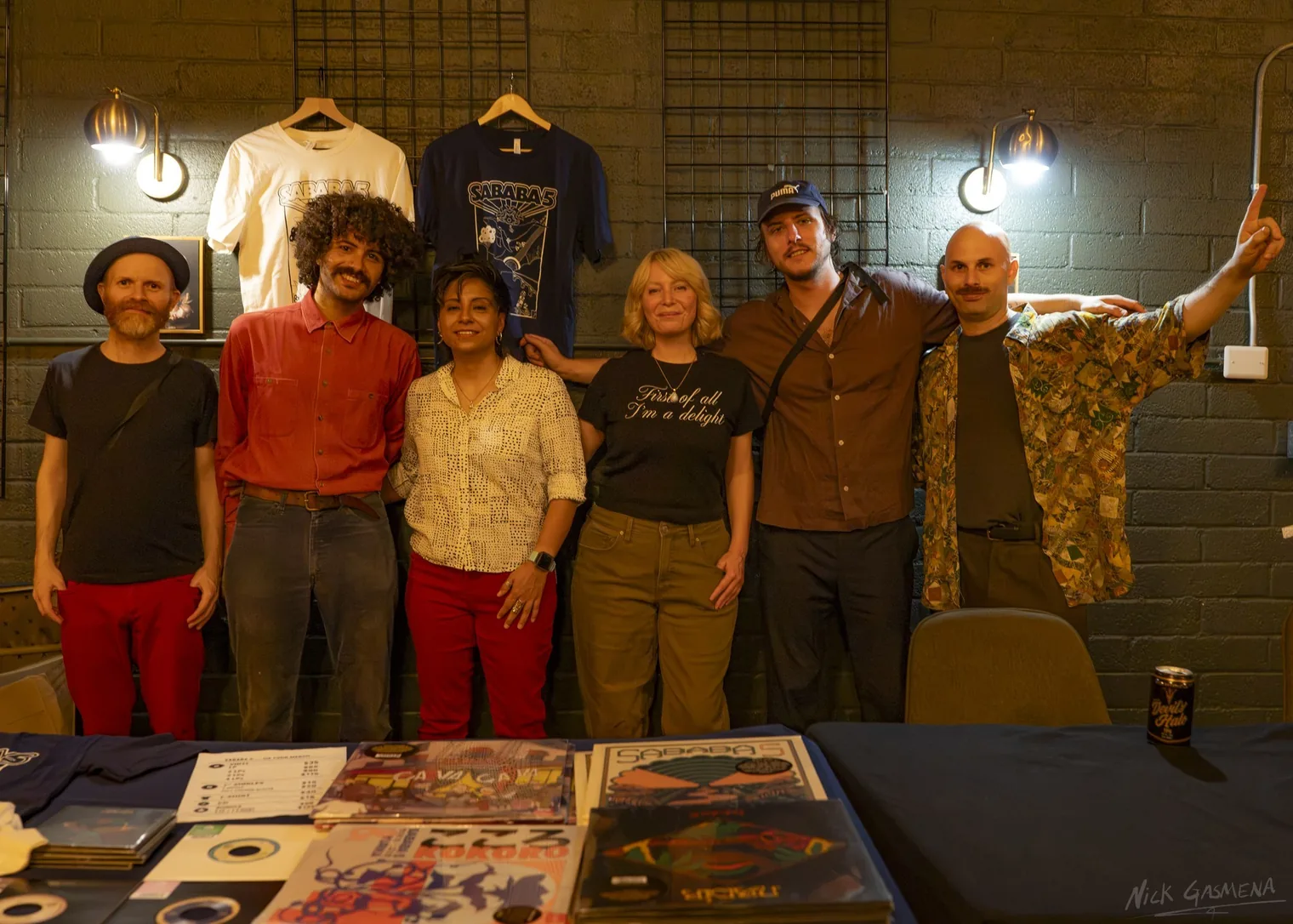
See the full concert gallery from the Mesa show →
Every frame from September 23, 2026 at The Rosetta Room. All photos by Nick Gasmena.
More from the night
11 of the set. Tap any frame to enlarge.